When to Replace a Commercial Door Instead of Repairing It: What Atlanta Businesses Should Know
A commercial door rarely fails all at once. More often, it starts with small annoyances that people learn to work around. The latch sticks in the morning. The closer slams if someone lets go too fast. The frame looks a little tired after years of traffic. Staff members know which way to pull, how hard to push, or which shoulder to lean into when the weather changes.
That kind of slow decline is exactly why many business owners put off replacement longer than they should.
Repair is often the right first move. A door that has drifted out of adjustment, a damaged closer, worn hardware, or a lock issue can often be corrected without replacing the full opening. But there is a point where repair becomes a patch on top of another patch, and that is where costs, safety, accessibility, and daily inconvenience start to stack up.
For Atlanta businesses, this decision tends to get urgent fast. Entry doors take a beating. Public-facing businesses deal with constant traffic, deliveries, weather exposure, and the occasional emergency, including storm damage or forced entry. Metro Atlanta also has a strong after-hours repair market for exactly that reason. When a door fails, it is rarely just a maintenance issue. It affects security, customer flow, employee frustration, and sometimes whether the entrance is legally usable at all.
The real question is not simply, “Can this door be repaired?” Almost any door can be repaired in some fashion. The better question is, “Does repair still make business sense, or has this opening crossed the line where replacement is smarter?”
The moment repair stops being the economical option
Business owners often compare the price of a repair visit against the price of a new door and stop there. That is understandable, but it misses the larger cost picture.
A repair can be cheaper today and still more expensive over the next year. If a door needs repeated service, creates lockouts, causes employees to babysit the entrance, or opens the business to complaints from customers, the true cost is no longer just the invoice from the technician. It is also downtime, disruption, and risk.
This is especially true with entrance doors that are used constantly. A back-office door with light traffic can survive with more piecemeal work than a front entrance that hundreds of people use each week. The heavier the use, the less forgiving an aging opening becomes.
In practice, replacement tends to make more sense when the problem is not isolated to one part. If the hardware is failing, the door leaf is damaged, the frame is out of shape, and the opening no longer operates smoothly as a system, repairing one item often just exposes the next weak point. You fix the closer and then discover the latch does not align well. You adjust the latch and then realize the frame is no longer holding the geometry it should. You get the lock working again and then the door still binds because the opening itself has shifted over time.
At that stage, the issue is not a broken part. The issue is that the opening has aged A-24 Door maintenance out of dependable service.
Five signs replacement is usually the smarter call
- The door has repeated failures, not a one-time issue, and service calls keep returning for related problems.
- The opening no longer works well as a whole, meaning the door, frame, latch, closer, and hardware all show wear or misalignment.
- The entrance may not meet current accessibility expectations after replacement work, especially if the new work affects usability.
- The door creates a safety or egress concern, including situations where required exit hardware may be part of the code picture.
- The business has already experienced storm damage, break-in damage, or severe wear that leaves the opening unreliable.
That list is short, but each point carries weight. A commercial door is not just a slab on hinges. It is a functioning part of access control, life safety, customer experience, and day-to-day operations.
Accessibility is where many old doors quietly fail the test
One of the clearest reasons to replace a commercial door instead of endlessly repairing it is accessibility.
For businesses open to the public, at least one entrance door or doorway must comply with ADA accessibility requirements. A key number here is the minimum clear width of 32 inches when the door is open 90 degrees. That sounds simple enough, but in older buildings, many entrance doors miss the mark by a frustratingly small amount. The opening may look usable, yet still fall short in practical terms for a wheelchair user, someone with a walker, or a customer managing mobility limitations.
Hardware matters too. Accessible door hardware should not require tight grasping, pinching, or twisting. Maneuvering clearances also matter. A door can technically open and still be difficult or awkward to use if the surrounding space does not allow the right approach and movement.
This is where owners sometimes get tripped up. They think, reasonably enough, that they are only replacing “the door,” not redesigning the entrance. But if replacing an entry door counts as an alteration and the work affects usability, the new door must comply with current accessibility standards. In other words, replacement can trigger a need to do it correctly, not simply replicate the old conditions with newer materials.
That is not a reason to avoid replacement. If anything, it is a reason to approach replacement more thoughtfully. A business that has lived for years with a marginal opening has an opportunity to improve the entrance, make it easier for customers to use, and reduce future headaches.
There are edge cases, of course. Not every older entrance needs full replacement immediately. In some cases, swing-clear hinges can gain about 1.5 inches of clearance, which may help an older opening improve accessibility without a complete overhaul. That can be a sensible intermediate step when the rest of the door system is still sound. But if you are already dealing with multiple repair issues, limited clearance, awkward hardware, and poor operation, that kind of fix may only postpone the inevitable.
A door that works for staff but not for customers is still a bad door
Owners and managers often adapt to faulty doors faster than customers do. The people who work on site know the tricks. They know to tug first, then push. They know which key turns stiffly and which handle catches. They know the side entrance stays unlocked because the front one is temperamental.
Customers do not know any of that. They just experience friction.
If a customer struggles to enter, or cannot use the entrance independently, that reflects directly on the business. It can also become an accessibility problem in more than one way. Even if there is an accessible entrance, keeping it locked during business hours is not a practical solution. ADA guidance is clear that if an accessible entrance is kept locked during business hours, the policy should change and the door should remain unlocked. If security is a concern, a call box or buzzer can be installed.
That point matters for Atlanta businesses in older properties, where side entrances, alternate doors, or workarounds sometimes become the default over time. If the “usable” entrance for a customer with mobility needs is effectively unavailable during business hours, repair decisions need to be looked at through a broader lens. Sometimes the better answer is not another service call on the old front door. It is replacing the opening so the main entrance can function as it should.
Security damage changes the equation quickly
There is a big difference between a worn door and a compromised door.
When a business has gone through a break-in, attempted forced entry, or storm damage, the conversation often shifts from maintenance to recovery. Atlanta-area providers commonly advertise emergency repair, break-in response, and after-hours commercial entry-door work because these incidents are not rare edge cases. They are a routine part of the market.
In those situations, repair is often used first to secure the building quickly. That makes sense. A door may need to be stabilized, boarded, or made operable again so the business can reopen or at least lock up safely.
But emergency repair is not always the same as a long-term solution.
A door that has been bent, twisted, splintered, or otherwise structurally compromised may never perform quite right afterward, even if it can be put back into service. It may continue to rack, drag, or misalign. The lock may work but feel rough. The frame may hold but not perfectly. Owners sometimes accept this because they are relieved the emergency is over. Then a few months later they are calling again.
That is often where replacement becomes the smarter financial decision. If the opening has taken a hit severe enough to change its structure or its reliability, continued repair tends to become reactive and expensive. It is one thing to replace a closer after normal wear. It is another to keep nursing a door that was damaged in a break-in and has never really recovered.
Life safety is not an area for improvised fixes
Some commercial doors are more than convenience points. They are part of the means of egress.
The building code picture can vary depending on occupancy and use, but one verified point is important here: the International Building Code requires panic hardware or fire exit hardware in certain high-occupancy or equipment-room egress situations. That means some doors have hardware expectations tied directly to life safety.
For owners, the practical takeaway is simple. If the door in question serves an egress role and the opening has chronic problems, this is not a good place for endless temporary fixes.
I have seen plenty of businesses focus on whether the door “opens and closes” and miss the more important question of whether it does so properly under stress, in a hurry, and with the hardware the situation demands. A sticky, misaligned, or improvised door can become much more serious in an emergency than it appears during an ordinary afternoon.
This is one of the clearest dividing lines between repair and replacement. If a needed repair leaves the opening fully dependable and appropriate for its use, that is fine. If there is lingering doubt about proper egress function, replacement deserves serious attention.
The hidden cost of recurring after-hours service
A single emergency call is just part of owning property. A pattern of emergency calls is a warning sign.
In Atlanta, 24-hour service and after-hours response are common in the commercial door world because failures do not wait for business hours. Locks fail when staff is trying to close. Closers break during the lunchtime rush. Damage from weather or forced entry can happen overnight. The service market exists because businesses need that support.
Still, relying on emergency repair over and over is not a strategy. It is a symptom.
After-hours work is usually more disruptive than planned replacement. Someone has to meet the technician. Staff gets delayed. Security becomes uncertain. Temporary solutions may be used until the right parts are available. Even when the actual repair is successful, the business has paid a premium in stress and interruption.
If your entrance door has already become the kind of problem that people “hope just makes it through the weekend,” replacement is usually worth considering seriously. A new door is not just new material. It is a reset on reliability.
Sometimes a modest fix buys time, and that is okay
Not every old commercial door in Atlanta needs to be replaced the first time it causes trouble. That would be wasteful and unnecessary.
There are plenty of cases where repair is the practical call. If the opening is fundamentally sound and the problem is limited, a good repair can restore years of useful service. If the clearance is only slightly short and the rest of the door performs well, swing-clear hinges might improve access enough to make replacement unnecessary for now. If the hardware is the weak link but the frame and door are stable, targeted work can be the right move.
Good judgment here depends on looking at the door as a system and being honest about the business’s tolerance for risk and inconvenience.
A law office with controlled traffic may live comfortably with a carefully repaired older entrance for longer than a retail business that opens to the public all day. A private facility with an alternate accessible entrance that functions properly may face different timing pressures than a storefront whose main entry creates daily customer difficulty. The answer is not identical for every property.
What matters is avoiding the trap of making the same repair-minded decision out of habit when the facts have changed.
Questions worth asking before you choose repair or replacement
- Is the current problem isolated to one component, or do several parts of the opening show wear or misalignment?
- If this door is replaced, will the new work need to meet current accessibility expectations, including clear width and usable hardware?
- Is the entrance dependable enough for daily public use, or are staff members compensating for issues customers should never have to navigate?
- Has the opening already suffered break-in damage, storm damage, or repeated emergency failures?
- Does this door serve an egress function where life-safety hardware and dependable operation matter more than a quick fix?
Those questions tend to clarify the situation quickly. Business owners often already know the answer once they walk through them honestly.
What smart replacement planning looks like
When replacement is the right move, the best projects start with the full opening, not just the slab. That means looking at width, hardware, operation, maneuvering space, and how the entrance is actually used during the day.
A common mistake is replacing the visible piece and leaving the underlying problems untouched. If the reason for replacement includes accessibility concerns, awkward operation, or repeated system failures, the solution should reflect that. The goal is not merely a new-looking door. The goal is an entrance that works reliably, supports access, and reduces service calls.
For public-facing businesses, this often has a customer-service payoff that owners underestimate. People notice when an entrance opens smoothly, feels safe, and works without fuss. They also notice when it does not.
That may sound like a small detail, but entrances shape first impressions more than most owners realize. A difficult door sends a message, even if unintentional. A well-functioning one does the opposite. It tells customers the place is maintained, usable, and welcoming.
Why Atlanta businesses should be especially practical about this decision
Commercial doors in a busy metro area live hard lives. High traffic, long operating hours, emergency incidents, and the realities of urban storefront security all push doors toward failure faster than many owners expect. That is why commercial door services in Atlanta are not just about planned maintenance. They are also about urgent response, damaged entries, and getting businesses secured after A-24 Hour Door National Inc something goes wrong.
That environment makes it even more important to distinguish between a repairable issue and a worn-out opening.
If you are calling for service because a closer failed on an otherwise solid door, repair is probably the sensible answer. If you are calling because the entry has become a collection of old fixes, questionable access, recurring lock issues, and damage history, replacement is usually the more disciplined choice.
A commercial door should not require local folklore to use. Customers should not need instructions. Staff should not need a workaround. Managers should not keep a mental list of quirks that determine whether the business can open smoothly each day.
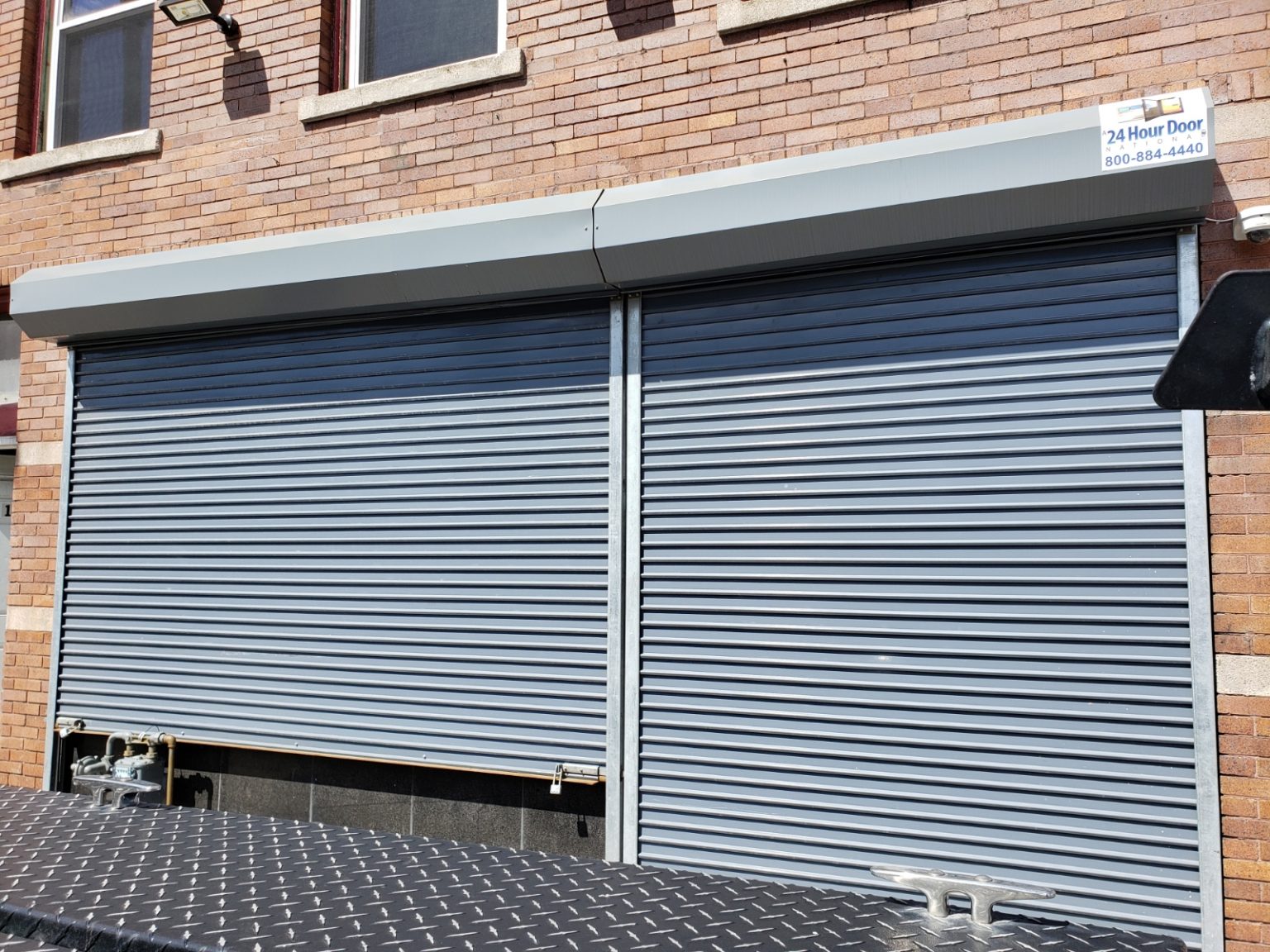
When a door reaches that point, replacing it is not overreacting. It is good operations. It is often better for accessibility, better for security, and better for the basic flow of the business.
And once you look at it that way, the choice tends to become much clearer.